
KATHAKALI
Kathakali is the most well known dance drama from the south Indian state of Kerala. The word Kathakali literally means "Story-Play". It is known for its large, elaborate makeup and costumes. The elaborate costumes of Kathakali have become the most recognised icon for Kerala.
History and Origin
Basically a dance form of Kerela. Kathakali has a long tradition.
It dates back to the 17th century. It was given its present form by Mahakavi Vallathol Narayan Menon, who was the founder of the Kerala Kala Mandalam.
Performance & Features
The themes of the Kathakali are religious in nature. They typically deal with the Mahabarat, the Ramayana and the ancient scriptures known as the Puranas. This is performed in a text which is generally Sanskritised Malayalam.
A Kathakali performance is a major social event. They generally start at dusk and go through out the night. Kathakali is usually performed only by men. Female characters are portrayed by men dressed in women’s costume. However, in recent years, women have started to become Kathakali dancers.
The actors rely very heavily on hand gesture to convey the story. These hand gestures, known as mudra, are common through out much of classical Indian dance.
Costume
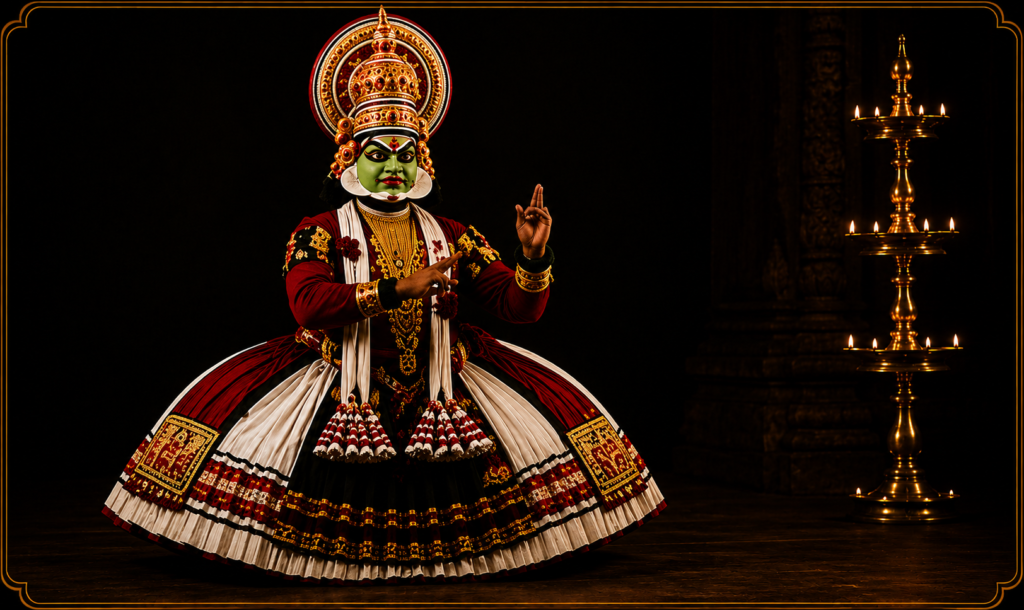
The costume is the most distinctive characteristic of Kathakali. The makeup is very elaborate and the costumes are very large and heavy.
There are several kinds of costume. There are: Sathwika (the hero), Kathi (the villain), Minukku (females), and Thatti. These basic divisions are further subdivided in a way which is very well known to Malayali (Keralite) audiences. Each character is instantly recognisable by their characteristic makeup and costume.
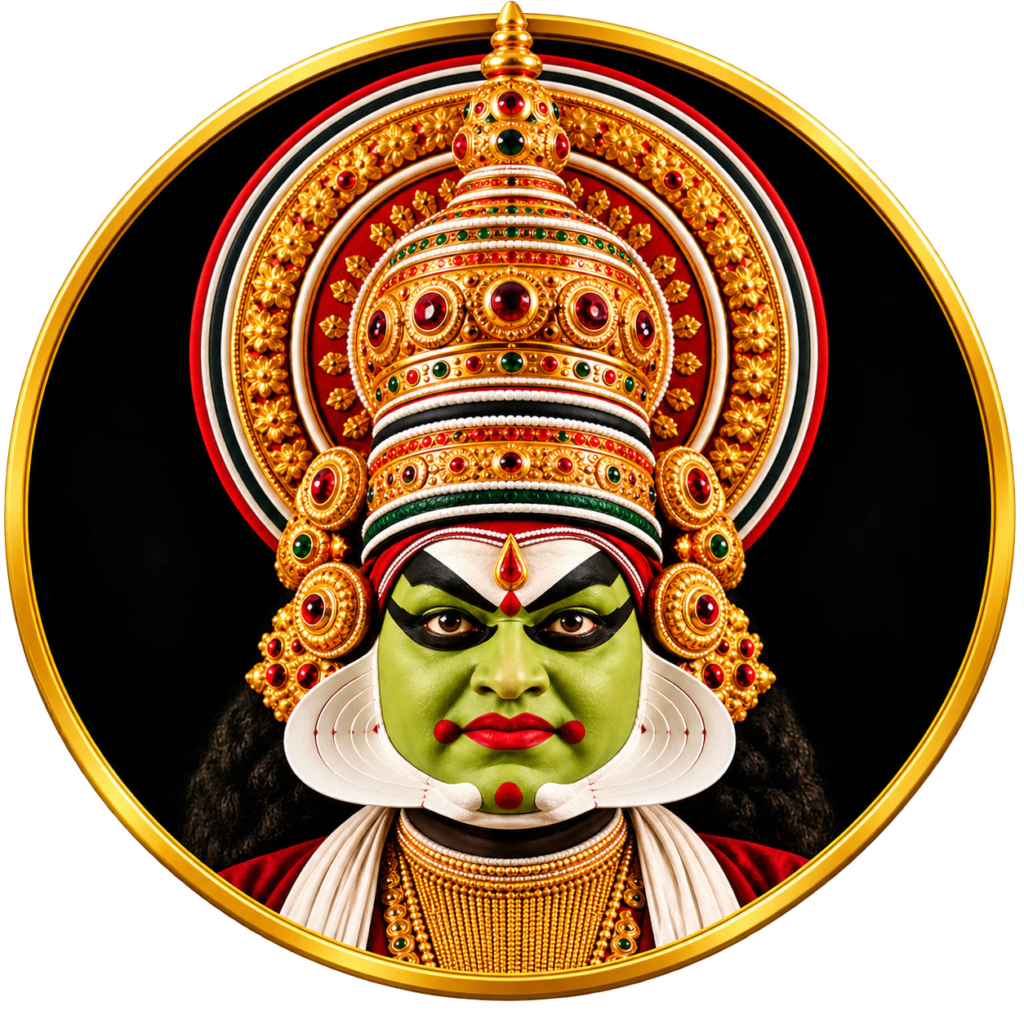
Sathwika
Represents – noble characters. like Rama, Krishna. The face is green with serene expression
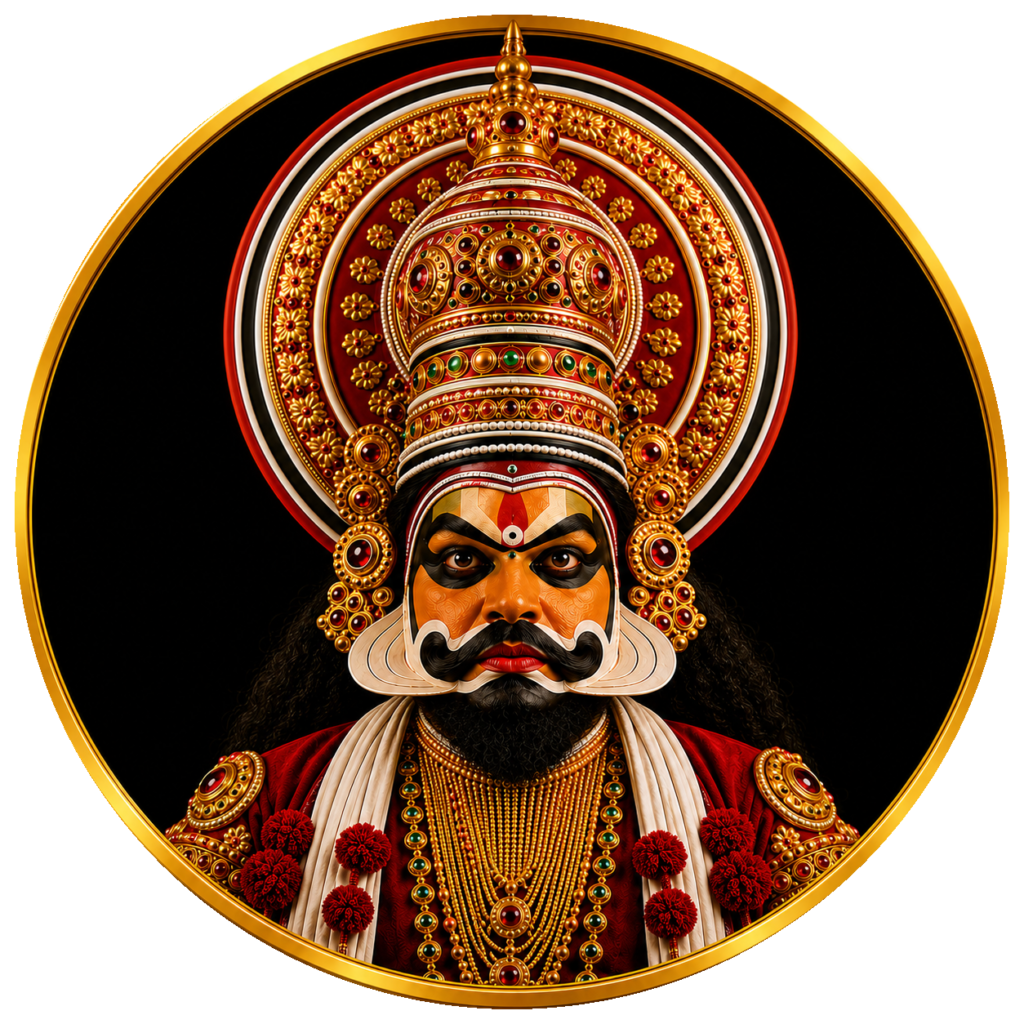
Kathi
Represents arrogant and evil characters like Ravana. Makeup is bold with knife-like patterns.
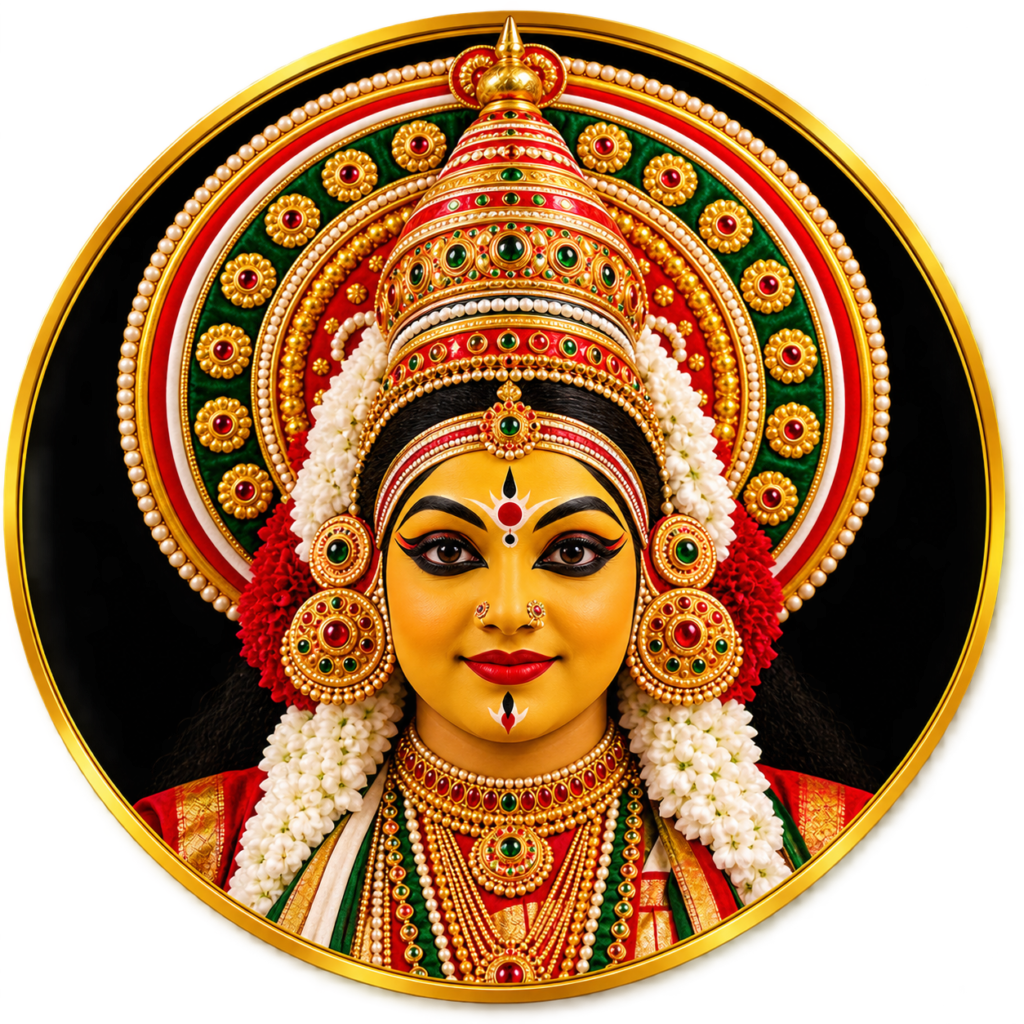
Minukku
Minukku is a graceful classical dance form, known for its elegant movements, subtle expressions, and serene beauty.
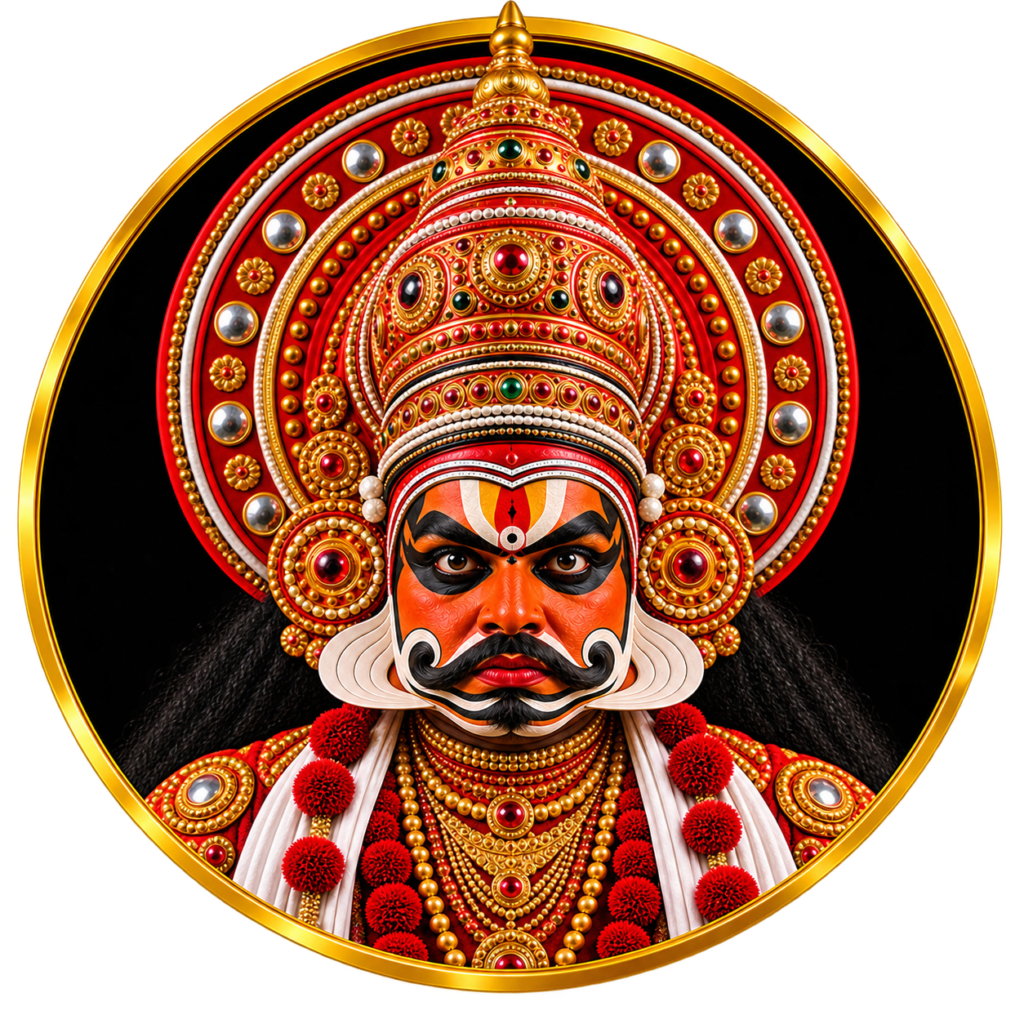
Thatti
Characterized by beard extensions that define the nature of the character.
Music
The music of Kathakali has some similarity to the larger body of South Indian classical music (Carnatic sangeet); however the instrumentation is decidedly different. Its local colour is strongly achieved by the use of instruments such as chenda, idakka, and shuddha madalam.
Kathakali is one of the oldest theatre forms in the world. It originated in the area of southwestern India now known as the state of Kerala. Kathakali is a group presentation, in which dancers take various roles in performances traditionally based on themes from Hindu mythology, especially the two epics, the Ramayana and the Mahabharata.
The technique of Kathakali includes a highly developed language of gesture, through which the artist can convey whole sentences and stories. The body movements and footwork are very rigourous. To attain the high degree of flexibility and muscle control required for this art, a Kathakali dancer undergoes a strenuous course of training, and special periods of body massage.
The dancers wear large head dresses, and the contours of the face are extended with moulded lime. The extraordinary costumes and make-up serve to raise the participants above the level of mere mortals, so that they may transport the audience to a world of wonders.
The orchestra of a Kathakali performance includes two drums known as the chenda and the maddalam, along with cymbals and another percussion instrument, the ela taalam. Normally, two singers provide the vocal accompaniment. The style of singing particular to Kathakali is called Sopaanam. The orchestra of a Kathakali troupe is unique and provides not only the background to the dancing, but also serves as a highly expressive special effects team. In the traditional village ambiance, the percussionists also provide publicity for the event by playing outside the venue for some hours before the start of the show.
Kathakali is a beautiful blend of nritta (pure dance), nritya (expressive dance) and natya (drama). It stands as a timeless classical dance form that continues to captivate audiences with its grace, expressions, and storytelling.